

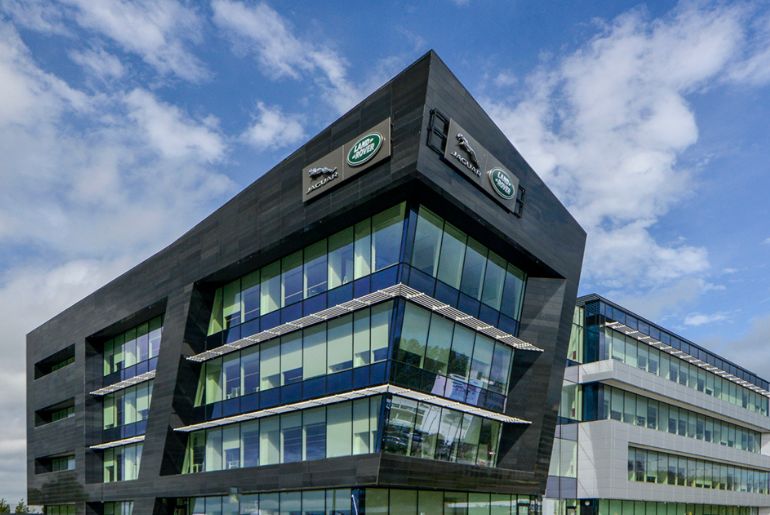
With an eye towards the Chinese market, Jaguar Land Rover Automotive, a division of Tata Motors, plans to resurrect the legendary Freelander as an electric vehicle (EV). This action, which aims to strengthen Tata Motors’ position in the electric vehicle market, is taken ten years after the Freelander was terminated.
In order to build a new line of electric vehicles and licence the Freelander brand, Jaguar Land Rover has teamed up with Chery Automobile Co. Chery’s production facilities and technologies will be utilised for manufacture, and this project will be overseen through their joint venture, CJLR.
Part of Jaguar Land Rover’s plan to take a bigger chunk of the biggest car market in the world is the reintroduction of the Freelander EV. Although CJLR will still make traditional gasoline-powered cars, their goal is to increase the number of electric vehicles they provide.
Changshu, China will be the site of the new Freelander EV’s manufacturing, with an initial launch into the Chinese market. In the future, Jaguar Land Rover intends to increase its availability to international markets. The firms haven’t yet disclosed the precise date when production will begin, though.
The Discovery Sport took the position of the Freelander brand, which had its debut in 1997, when it was withdrawn in 2015.
Additionally, Range Rover and Range Rover Sport local assembly by Jaguar Land Rover is scheduled to start in India. The carmaker has had tremendous development; sales rose to 4,436 units in FY24 from FY23, an 81% increase. Over the next three years, the corporation wants to treble its business in India.
Under Tata Motors’ ‘Reimagine’ strategy, Jaguar will transition entirely to electric vehicles, and 60% of Land Rover models will be electric by 2030, moving away from combustion engines towards zero-emission technology.
Tata Motors intends to bring electric vehicles to the masses in India by launching new models in FY25, such as the Curvv.ev, Harrier.ev, and Sierra.ev. In FY26, the Sierra.ev and the Avinya—Tata’s first completely ground-up EV—will come after this.
In Q4FY24, Tata Motors reported a substantial increase in net profit, which more than tripled to ₹17,528 crore from ₹5,496 crore the previous year. Strong results in each of its three business sectors and a ₹9,500 crore deferred tax credit were the main drivers of this profit increase.
 Click Here to get the latest EV news and exclusive updates from EV Mechanica on WhatsApp!