

India’s freight and mobility momentum remained resilient in November 2025, with diesel consumption rising to a six-month high, supported by steady logistics activity, strong agricultural demand, and continued growth in the electric three-wheeler (EV-3W) segment, according to the latest Shriram Mobility Bulletin. While retail vehicle sales cooled from October’s festive peak, underlying economic activity and industrial offtake remained robust.
Truck Rentals Stay Firm Across Key Freight Corridors
Truck rentals remained largely stable across major trunk routes in November, reflecting sustained domestic freight demand. The Guwahati–Mumbai–Guwahati and Kolkata–Guwahati–Kolkata corridors recorded the strongest month-on-month (MoM) growth of 0.7% each. Rentals along Delhi–Mumbai–Delhi, Delhi–Kolkata–Delhi, and Mumbai–Chennai–Mumbai rose 0.6% MoM, while routes such as Delhi–Hyderabad–Delhi, Delhi–Chennai–Delhi, Delhi–Bengaluru–Delhi, and Bengaluru–Kolkata–Bengaluru saw 0.5% MoM gains.
However, some southern and western routes faced mild pressure. The Mumbai–Kolkata–Mumbai corridor dipped 0.5% MoM, while Bengaluru–Mumbai–Bengaluru declined 1.4% MoM, partly due to pollution-related restrictions affecting logistics movement in the NCR region.
Year-on-Year Growth Reflects Strong Freight Sentiment
On a year-on-year (YoY) basis, freight demand showed healthy expansion. Truck rentals surged 11% on Mumbai–Chennai–Mumbai, 10% on Delhi–Mumbai–Delhi and Kolkata–Guwahati–Kolkata, 9% on Bengaluru–Mumbai–Bengaluru, and 8% on Delhi–Hyderabad–Delhi. Several other key corridors posted 6–7% YoY growth, underlining resilient goods movement across the country.
Diesel Consumption Jumps 12% Month-on-Month
Fuel consumption data reflected strengthening industrial and transport activity. Diesel demand rose sharply by 12% MoM and 4.7% YoY, reaching its highest level since May 2025. The rise was attributed to GST rate cuts, higher industrial output, and steady freight movement across states. In contrast, petrol consumption declined 4% MoM, indicating moderation in personal mobility after the festive season.
Post-Festive Cooling in Vehicle Sales
November witnessed a seasonal correction in vehicle retail sales after October’s high festive base. Goods carrier sales declined 16% MoM, though they remained a solid 22% higher YoY, signalling strong structural freight demand. Three-wheeler goods carriers fell 12% MoM, while e-rickshaws with carts grew 17% MoM, driven by rising urban last-mile delivery demand.
Passenger vehicle segments saw a sharper pullback, with passenger car sales contracting 32% MoM and two-wheelers moderating 19% MoM as festive buying tapered off.
Agriculture Vehicle Segments Show Strong Momentum
Agriculture-linked vehicle categories remained one of the standout performers in November. Commercial tractor sales rose 8% MoM, while agricultural tractor sales surged a sharp 80% MoM, supported by favourable farm credit flows, stable minimum support prices (MSPs), and strong post-harvest activity. Agricultural trailer sales jumped 24% MoM, reflecting robust rural transport demand ahead of the Rabi season.
EV Segment Shows Mixed Short-Term Trends, Strong Long-Term Growth
The electric vehicle segment displayed mixed monthly performance but remained structurally strong. Electric two-wheeler sales declined 19% MoM after the festive spike but were still 29% higher YoY, indicating sustained consumer adoption.
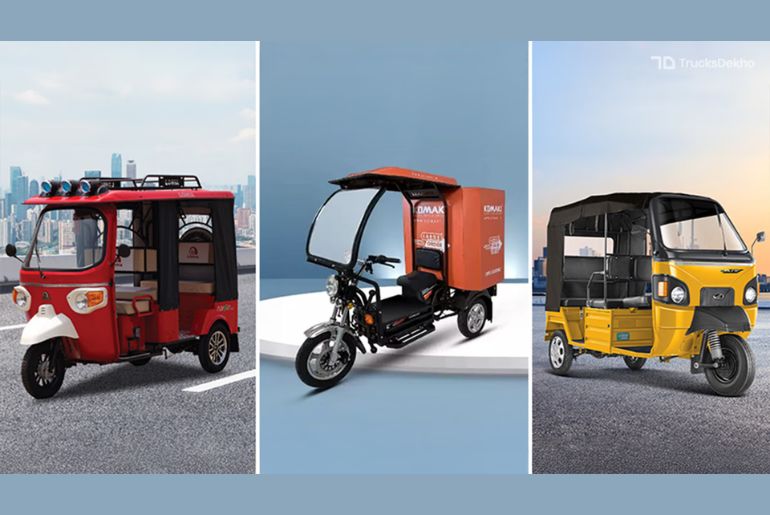
Electric three-wheelers outperformed all segments, recording an 18% MoM growth and a staggering 414% YoY surge, driven by growing demand in both passenger mobility and last-mile cargo delivery. Electric car sales declined 23% MoM, yet posted a strong 112% YoY increase, reflecting rising acceptance and widening model availability.
FASTag and E-Way Bill Data Signals High-Value Freight Movement
FASTag toll volumes declined 1.9% MoM and 5% YoY, while value collections increased 1.4% MoM and 8% YoY as of November 28, 2025. This indicates that fewer vehicles are carrying higher-value freight payloads.
Meanwhile, e-way bill activity softened following heavy pre-festive dispatches in October. Intra-state e-way bill generation fell 2% MoM but grew 14% YoY, while transaction values dipped 5% MoM but remained 7% higher YoY. Interstate bill generation declined 8% MoM, though it still posted 2% YoY growth, with values down 8% MoM but up 2% YoY.
Industry Outlook: Caution on Exports, Firm Domestic Demand
Commenting on the trends, Mr Sudarshan Holla Balnad, Joint Managing Director and Chief Operating Officer – Commercial Vehicle Vertical, Shriram Finance Ltd, said that November saw truck rentals firm up on the back of strong domestic consumption and lower GST rates. He added that early signs of stress are emerging in export-orientated manufacturing due to U.S. tariff pressures, though the situation could improve once trade negotiations are finalised.
Outlook for Winter Season Remains Constructive
With diesel demand at a six-month peak, strong agricultural activity, and rapid growth in EV three-wheelers, India’s mobility and logistics ecosystem enters the winter season on a firm footing. While exports pose a short-term risk, domestic consumption and rural recovery are expected to keep freight demand and mobility growth resilient in the coming months.
 Click Here to get the latest EV news and exclusive updates from EV Mechanica on WhatsApp!