

In a major boost to India’s clean transportation ambitions, India and Germany have strengthened their strategic collaboration to fast-track the country’s electric mobility transition. The renewed partnership was reinforced during a high-level roundtable held under the Indo-German Partnership for Green and Sustainable Development (GSDP), bringing together senior government officials, industry leaders, and policy experts from both nations.
The discussions focused on building a scalable, safe, and financially viable electric vehicle (EV) ecosystem that supports India’s net-zero goals and sustainable transport roadmap.
Focus on Financing, Charging Infrastructure and Grid Readiness
A key pillar of the Indo-German collaboration is the mobilisation of scalable financing solutions for EV infrastructure, manufacturing, and clean mobility projects. Both sides pointed out that it requires blended finance, public-private participation, and long-term capital to ensure rapid EV adoption across passenger, commercial, and public transport segments.
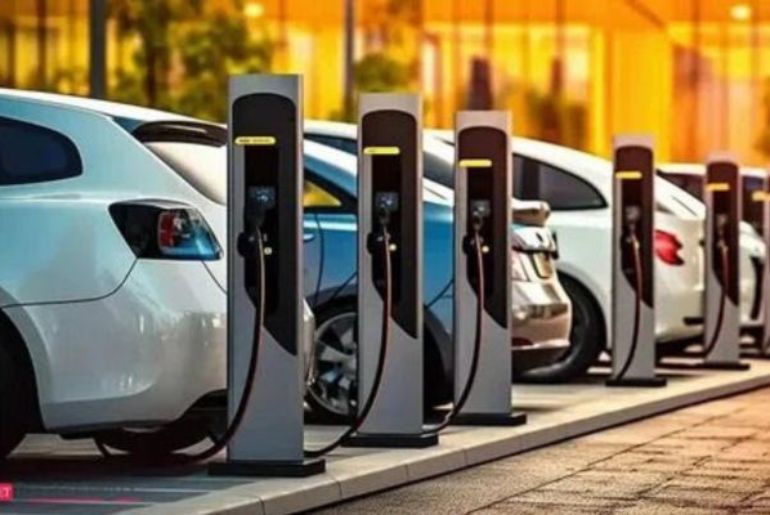
The partnership will also prioritise charging infrastructure expansion and power grid readiness. With EV adoption rising steadily in India, strengthening grid capacity, smart charging solutions, and interoperability standards will be critical to avoid future bottlenecks and improve charging reliability nationwide.
Strengthening Battery Safety, Standards and Lifecycle Management
Battery safety and quality standards formed another critical area of cooperation. India and Germany will work closely to establish robust regulations covering battery manufacturing, performance, fire safety, recycling, and end-of-life management. This is expected to improve consumer confidence while ensuring sustainable raw material utilisation and circular economy practices.
The collaboration will also encourage technology exchange in advanced battery chemistries, energy storage solutions, and recycling systems.
Multimodal Electrification Across Transport Segments
Unlike traditional EV policies focused primarily on private vehicles, the Indo-German partnership will promote multimodal electrification. This includes the electrification of:
-
Public transport systems such as electric buses and metro feeder services
-
Shared mobility solutions, including e-rickshaws and ride-hailing fleets
-
Last-mile logistics and urban freight operations
The approach aims to cut urban emissions at scale while improving operational efficiency and lowering transport costs for commuters and businesses.
Workforce Development and Skill Training for the EV Industry
Recognising the importance of human capital, India and Germany will jointly support workforce development and advanced skill training for EV manufacturing, charging infrastructure installation, battery servicing, and digital mobility systems. Special focus will be placed on inclusive training programmes to build a future-ready green workforce.
This will help India strengthen its domestic EV value chain while creating large-scale employment opportunities across the clean mobility ecosystem.
Moving Beyond Pilot Projects to a System-Wide EV Ecosystem
Officials noted that India’s EV journey must now shift from scattered pilot projects to a comprehensive, system-wide electric mobility ecosystem. The Indo-German partnership will align central and state EV policies, public transport electrification programmes, renewable energy integration, and private sector participation into a unified national framework.
Existing flagship schemes supporting EV manufacturing, charging infrastructure, and electric buses will be integrated under this broader cooperation framework to ensure faster implementation and better coordination.
Strengthening Long-Standing Indo-German Green Cooperation
The renewed mobility partnership builds on decades of cooperation between India and Germany across renewable energy, grid modernisation, climate finance, and green hydrogen. Germany’s technical expertise and India’s large-scale manufacturing base are expected to play a complementary role in scaling clean mobility solutions across the country.
Together, the two nations aim to accelerate the adoption of electric vehicles while advancing climate action, energy security, and sustainable urban development.
What This Means for India’s EV Future
With this strengthened partnership, India is expected to witness:
-
Faster rollout of EV charging stations across cities and highways
-
Improved battery safety, reliability and recycling standards
-
Wider adoption of electric public transport and commercial fleets
-
Stronger investor confidence in India’s EV manufacturing ecosystem
-
Rapid generation of green jobs and advanced mobility skills
The Indo-German collaboration is set to play a critical role in transforming India into one of the world’s fastest-growing electric mobility markets over the coming decade.
 Click Here to get the latest EV news and exclusive updates from EV Mechanica on WhatsApp!